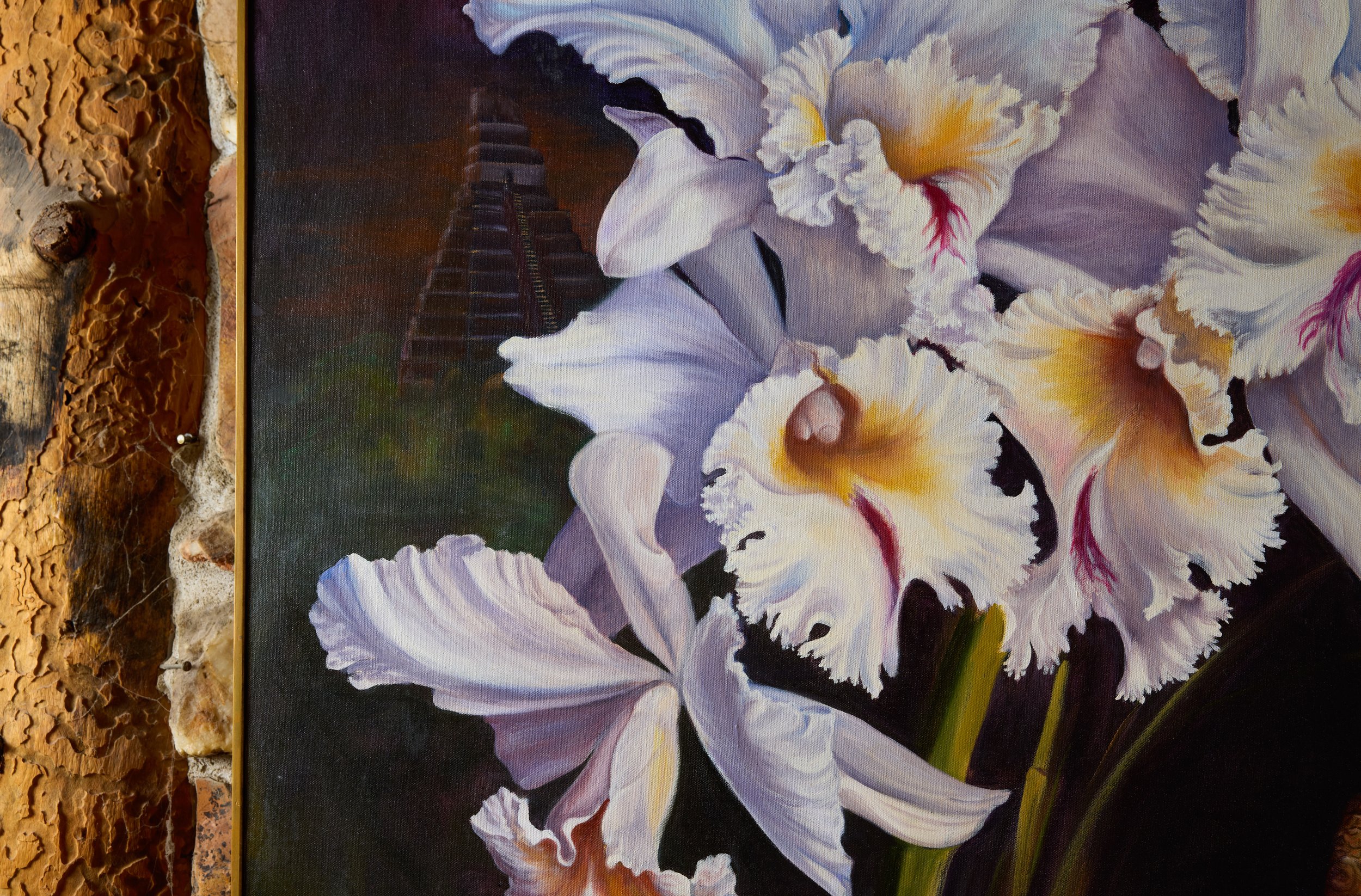
The Ruins
The Ruins
Get on down the road
This painting is special. There's a reason it sits by itself and not within a collection. It tells a unique story about Dell's life, captured on canvas in a way none of the others do. Authentic in both its actualization and realization, Dell once told me he became so intimate with this painting during its creation that he felt he could have "licked the canvas clean."
The story begins long before the canvas was ever stretched. Back in the mid-1960s, Dell began traveling to Guatemala. At first he went searching for the royal purple dye used throughout history. It fascinated him that a single color could carry so much meaning across civilizations. Eventually, though, his travels became about something entirely different.
A man.
Through those years he developed a friendship with Philip that lasted the better part of his life. It was a relationship filled with history, affection, admiration, and eventually temptation. Those feelings remained almost entirely one-sided, existing quietly beneath decades of friendship. As far as Dell ever understood, Philip never expressed romantic or sexual interest in men and wasn't interested in being persuaded or pursued. That never changed the friendship they shared, but it did shape the distance between what Dell wished for and what reality would allow.
Philip became deeply important to Dell's personal development. He challenged the way Dell saw himself and the world around him. I think, in many ways, Philip gave Dell permission to become Kinyon. To question things. To create his own answers instead of accepting someone else's. There are people who unknowingly change the course of another person's life simply by existing. Philip was one of those people.
The two remained close throughout the years. They planned scheduled phone calls, exchanged postcards, and continued a friendship that somehow survived both distance and time. Then one day something happened that Dell never thought would.
Philip finally expressed an openness to Dell's long-held desires and a willingness to explore them.
I couldn't imagine what that must have felt like. Nearly an entire lifetime spent loving someone from a respectful distance, only to suddenly discover that what once seemed impossible might actually happen. Dell immediately began planning another trip.
Then Philip never called again.
At first there was confusion. Dell called several times but there was no answer. He waited. He called again. Eventually the phone stopped ringing altogether. There was no explanation. No letter. No family member reaching out. No goodbye.
Nothing.
Only silence.
It was as though Philip had simply disappeared from the world. Dell said it took him a while to accept what had happened. This painting is where Dell finished the story for himself.
He once explained that this was the place where he finally touched every part of Philip's body he had always wanted to. Here he could finally lay him down, kiss him from head to toe, and experience the intimacy life had never allowed. The painting became something much more than an image. It became the only place where that relationship could ever fully exist.
Even the canvas itself feels appropriate. Dell built the stretcher, stretched it by hand, prepared the surface, and created the space where the two of them could finally exist together. In a way, he even made the bed they would forever lie upon.
As the painting neared completion, tragedy struck once again. One of the stretcher panels Dell had built failed under the pressure of the stretched canvas. He described the damage as one of the single worst moments of his life. For the first time he truly believed he had ruined something that mattered deeply to him. He didn't know how to fix it, and he feared what would become of the painting after he was gone if no one understood what had happened.
Then, as Dell often did, he laughed.
He reminded himself that none of it really mattered. He hadn't made the painting for critics or collectors. He made it because it allowed him to spend a little more time with one of his closest friends. So he built another stretcher, carefully cut and re-stretched the canvas, and kept moving forward. Later he would tell me the experience taught him one of life's simplest lessons.
"Just get on down the road."
The painting still carries that scar today. Most people will never notice it, but those who know its story always will. I don't think it's a flaw anymore. I think it's part of the painting's honesty. Like the relationship itself, it isn't perfect, nor does it pretend to be. It's simply real.
Maybe that's why this painting has always stood alone. Perhaps tragedies in our life aren’t real. Maybe they're just bumps down a long winding road.
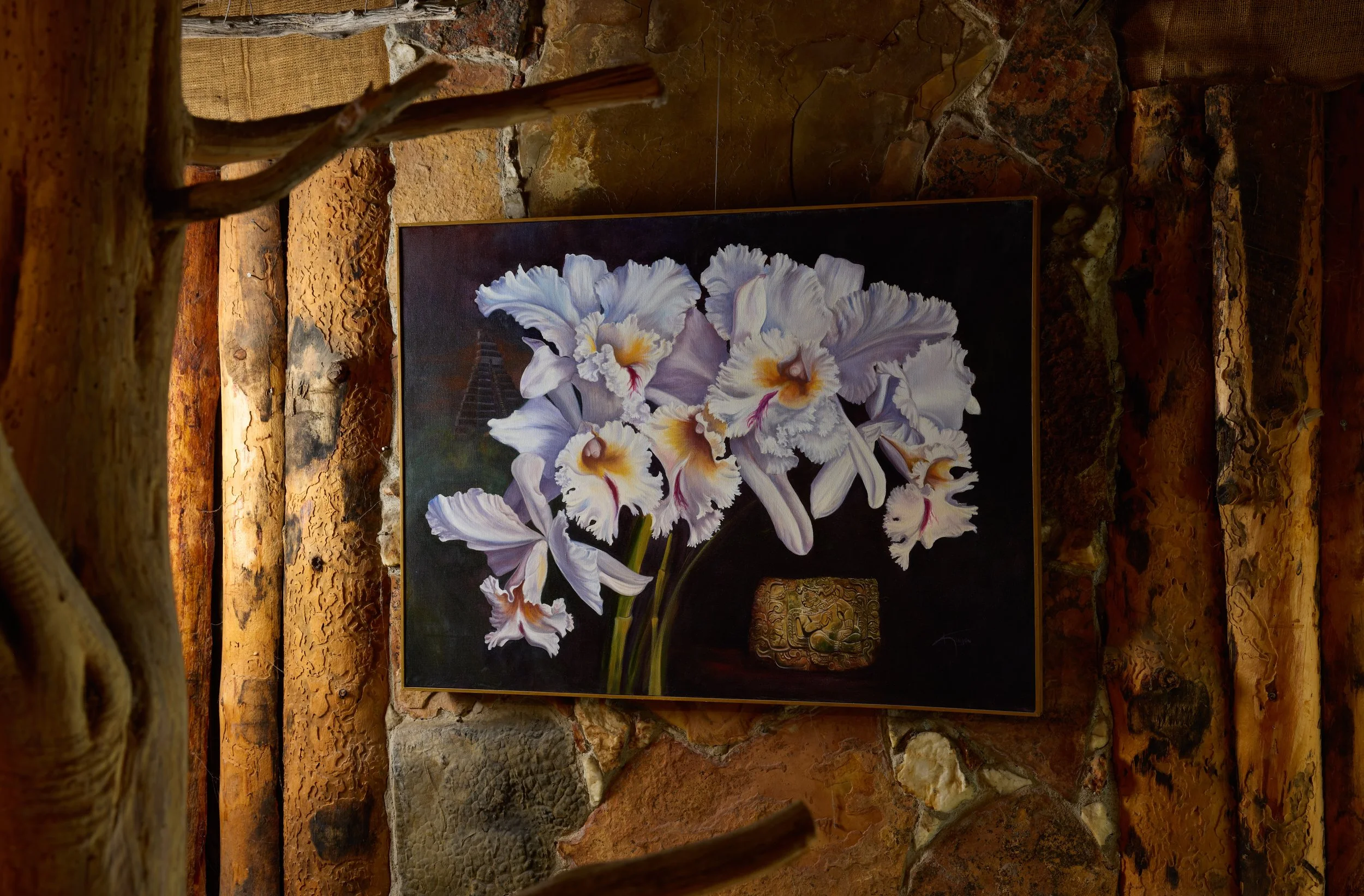
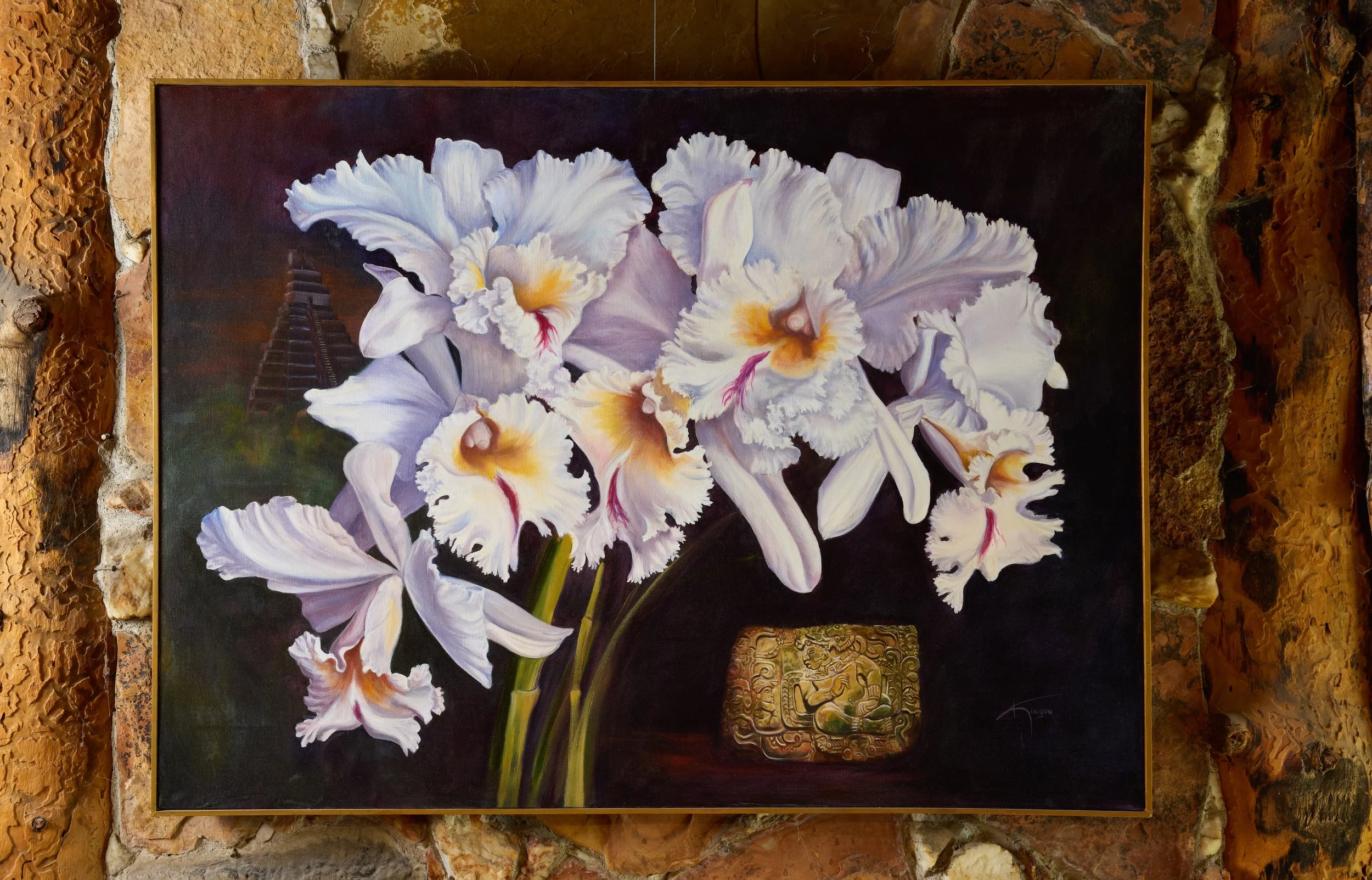
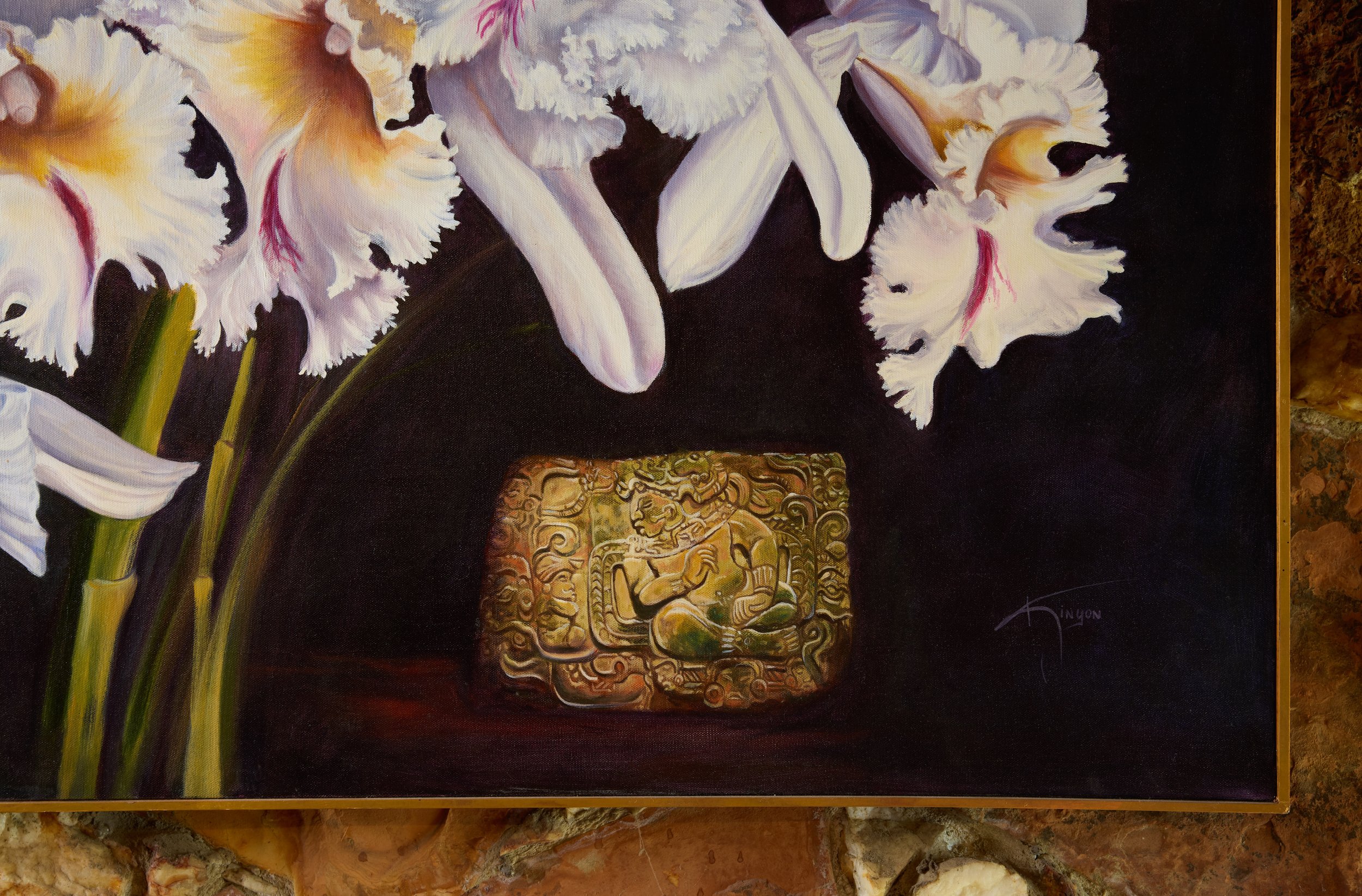
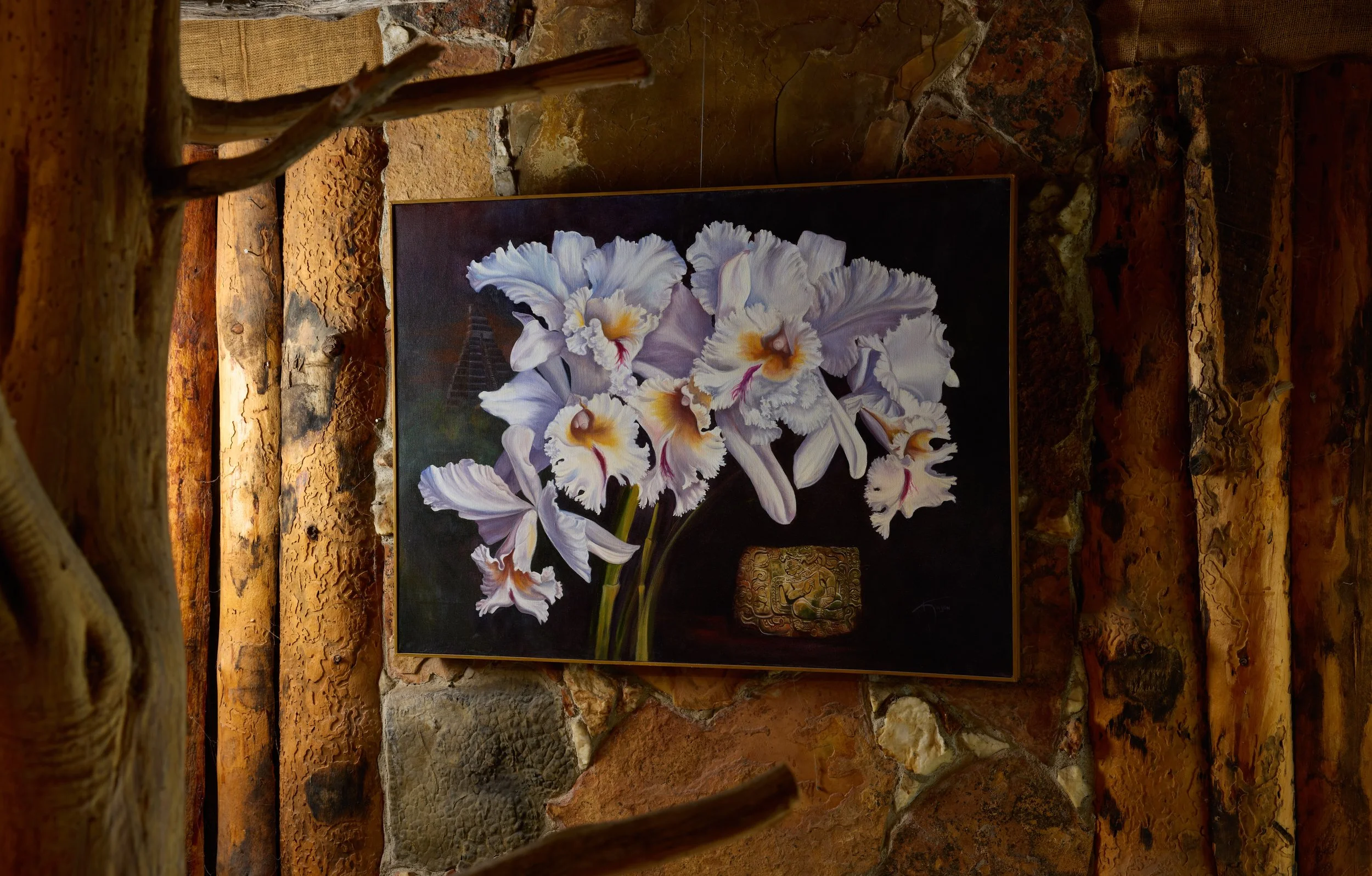
The Ruins ( 1998-99), Oil on Canvas, Hand Stretched and Framed 31×43 Offering Price: *Contact for pricing