The maker of things
The Life of Dell Kinyon Taylor
The Boy Who Wanted More
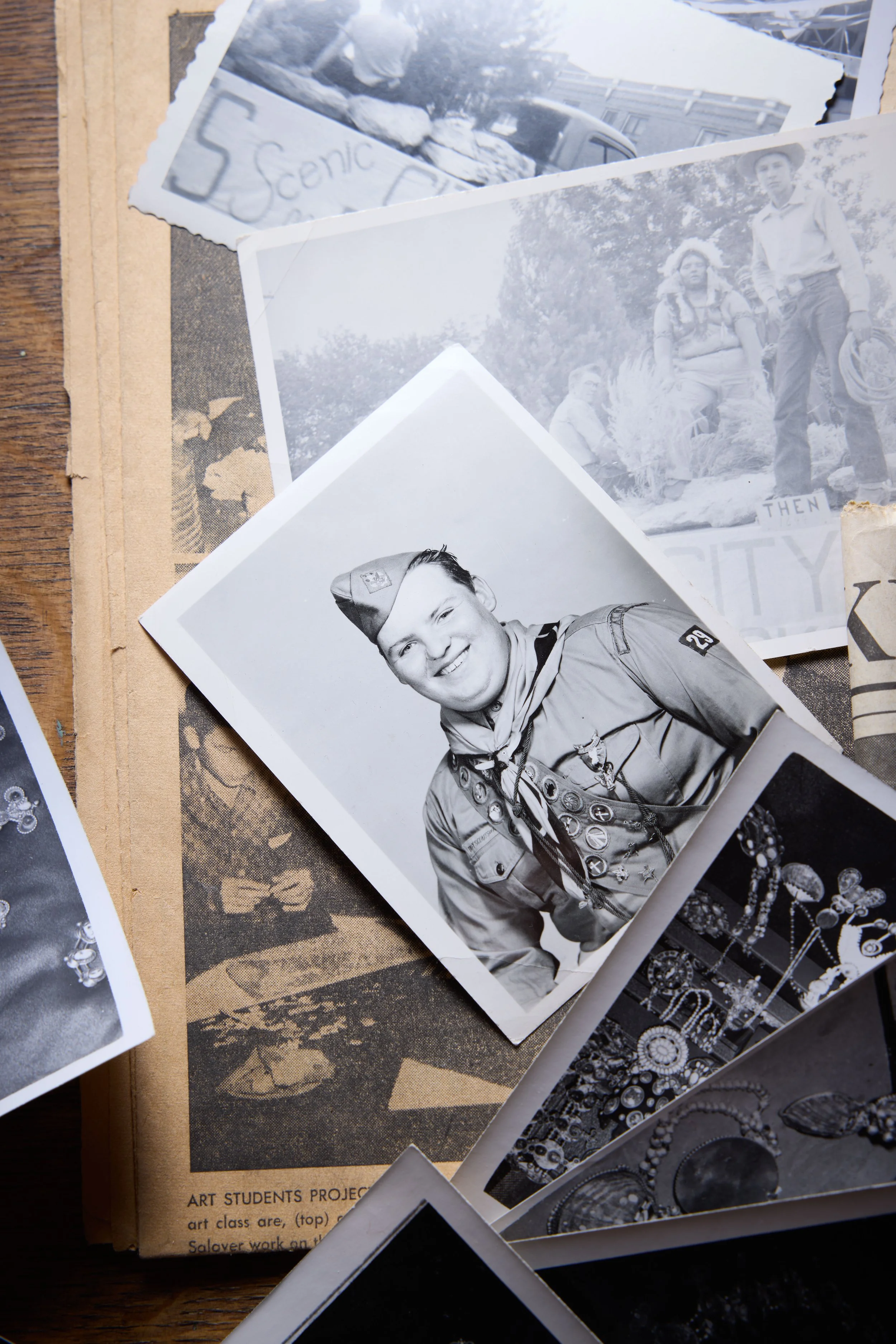
Dell was born on a small dairy farm in rural Idaho in 1933. His home had no electricity until he was 15 years old; water inside the house came from a hand pump 100 feet away. He had one teacher in a single-room schoolhouse from elementary school until he graduated high school. This might be a difficult type of childhood for us to relate to.
It all started Christmas morning when Dell was 8 years old. He asked his mother for a baby doll so he could make bright-colored clothes and dress it himself. When he opened his present to discover the doll, he said his life changed forever. He jumped, hooted, and hollered with true joy and intense excitement. The moment was real, raw, and a significant emotional event for him. He said it was the happiest he’d ever been.
When finally looking up from the doll and out of the box, the experience of his special moment ended. He saw his family staring back at him. He said his father’s face was forever burned behind his eyes, and the image would never go away. He described this moment as the first time he felt queer and all alone. He said: “Back then, queer meant something was very, very strange, unacceptably wrong and abnormally weird about you.”
Early in his life, his energy moved him from the cow shit in the fields to the house with his mother. He said she had one hell of a time trying to keep him busy. Using her precious savings from selling eggs in town, she would fund the materials needed for him to use. He learned to sew, knit, crochet, and much more.
He began winning awards in the county fair as young as 6 for his stitchery work. Later, when he was 11, he started to learn from an old toothless native woman living by the river. She taught him to create fibers and cloths from the source of materials.
He learned to cart wool, spin yarn, weave and traditionally tan hides using the animal brains. This fundamental practice of sourcing his materials followed him to the point that he traveled the world in search of the royal purple dye used throughout history.
The Teacher
Dell came from a time when information wasn’t at the tips of fingers from a black-magic mirror found in a pocket. Learning had to be earned at a different pace and in a different fashion than today.
I think that’s why he became a teacher. So he could maintain a constant state of creative learning and exploration. The man was truly a genius by today’s standards and definitions.
He started teaching in Ogden, Utah, at Ben Lomond High beginning 1964 until his retirement in 1987. During that time, he created a classroom full of wonder and excitement: something so profound, it had an immediate effect on the faculty, students, and community – to the point that the United States government studied his rubrics, methods, and teaching materials back in the late 1970s. He was also responsible for the school’s current logo renderings and mascot.
He had several Gila monsters, rattlesnakes, all manner of birds, parrots, reptiles, and plants housed within the powerful space called a classroom. At one point, he even walked the halls with a bobcat tied to a leash…a friggin’ bobcat.
Teaching was the single most important thing in Dell’s world. To the point that he donated his body to a university, looking for the opportunity to teach one last time.
I only hope his students know how important they were to him. He said they were always his biggest fans. Because they weren’t afraid of cheering for him when nobody else would.
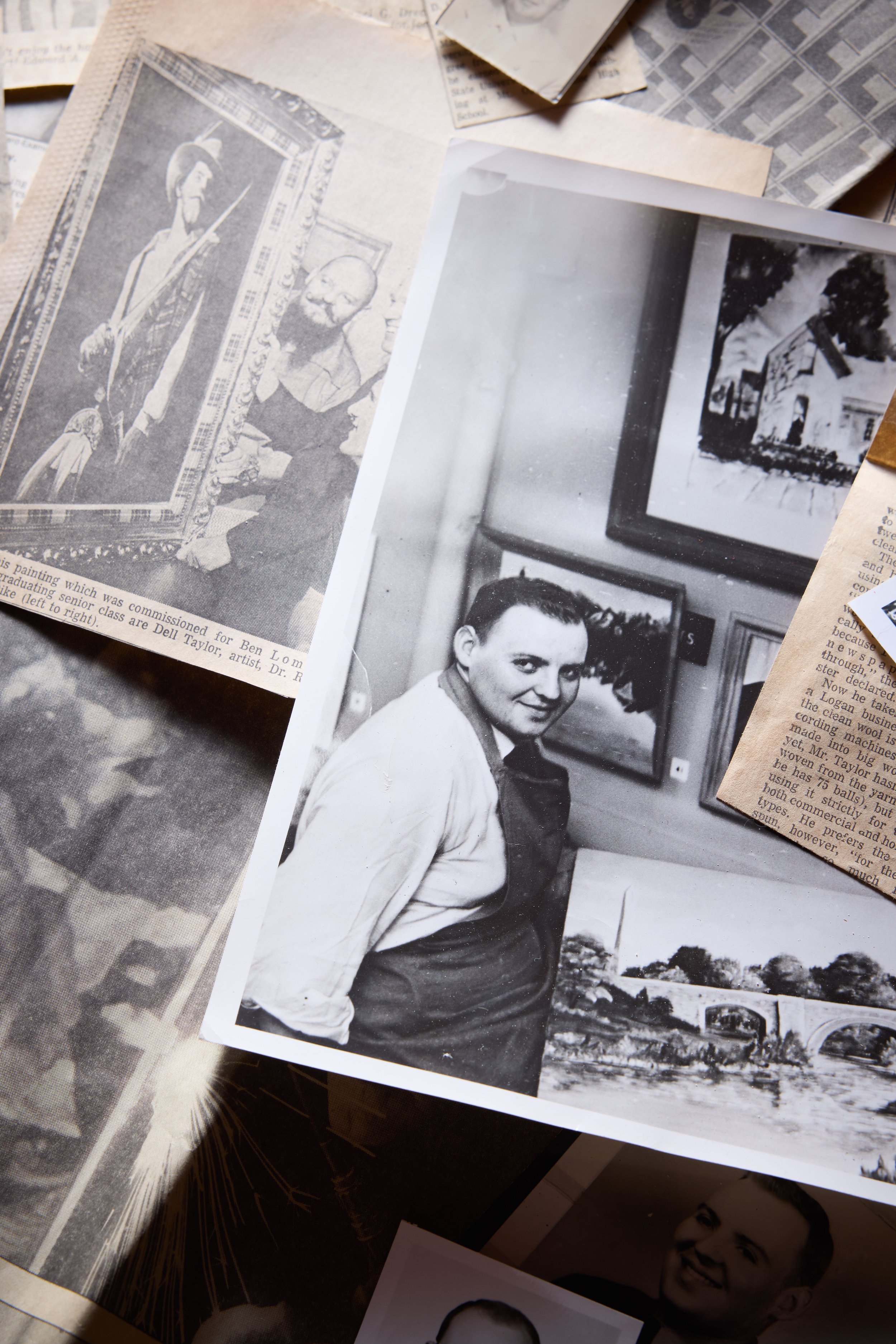
Airman 1st class Dell Taylor age 25 at his one man show inside the United States Pentagon
A little Context
This story takes place in Ogden, Utah, where if you’re unfamiliar with the political climate inside the state, the secrecy of his work, taboo nature of his pieces, and the public rejection of his chosen figure might be hard to understand at first.
It’s widely understood within the state that it’s a highly, highly religious place, a place where a form of nudity, sexuality, or simple defiance to the church would end with major consequences. The LDS church is so imbedded within the political system, cultural practices, and community, it skates the line between separation of church and state, especially in the 1960s-1990s compared to now.
This wasn’t a time or place where you could be gay, let alone a teacher with young minds you're affecting on the daily. The physical environment alone made it to where Dell never came out openly as gay within his community.
Dell was in a religiously arranged LDS marriage when he was 30. Based on Mormon standards, most people were expected to be married by their early 20s. Dell and his wife were together for 60 years before her death.
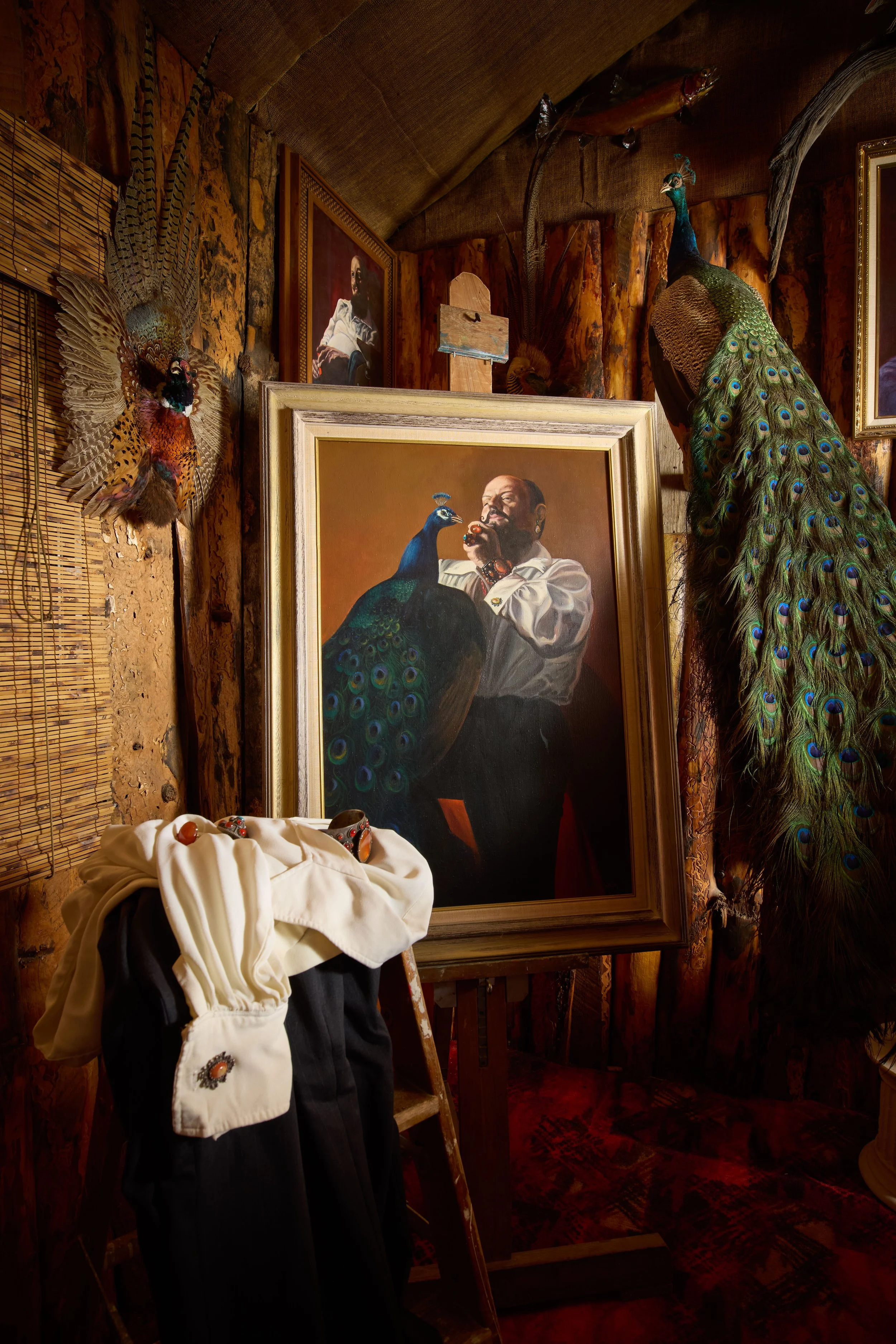
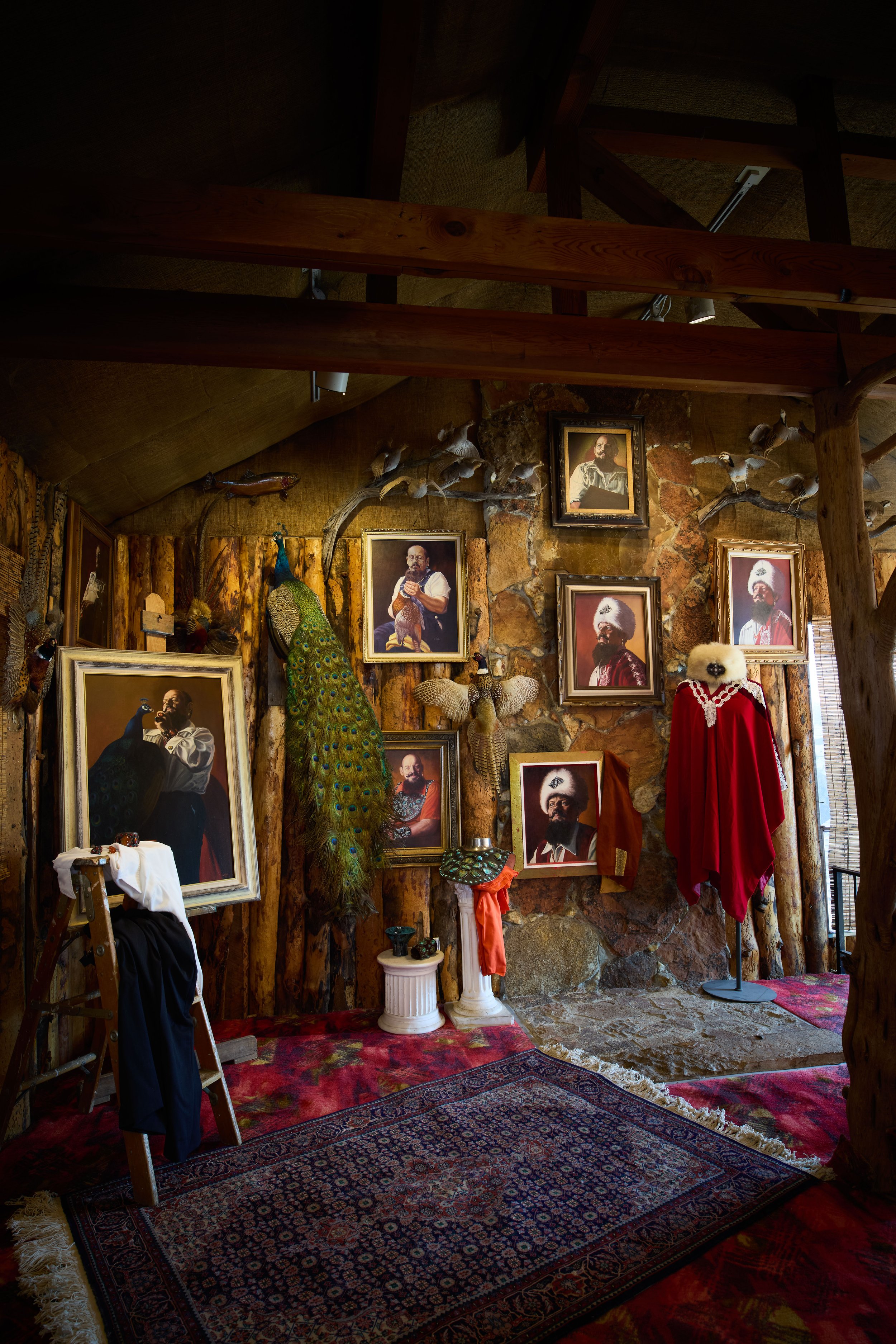
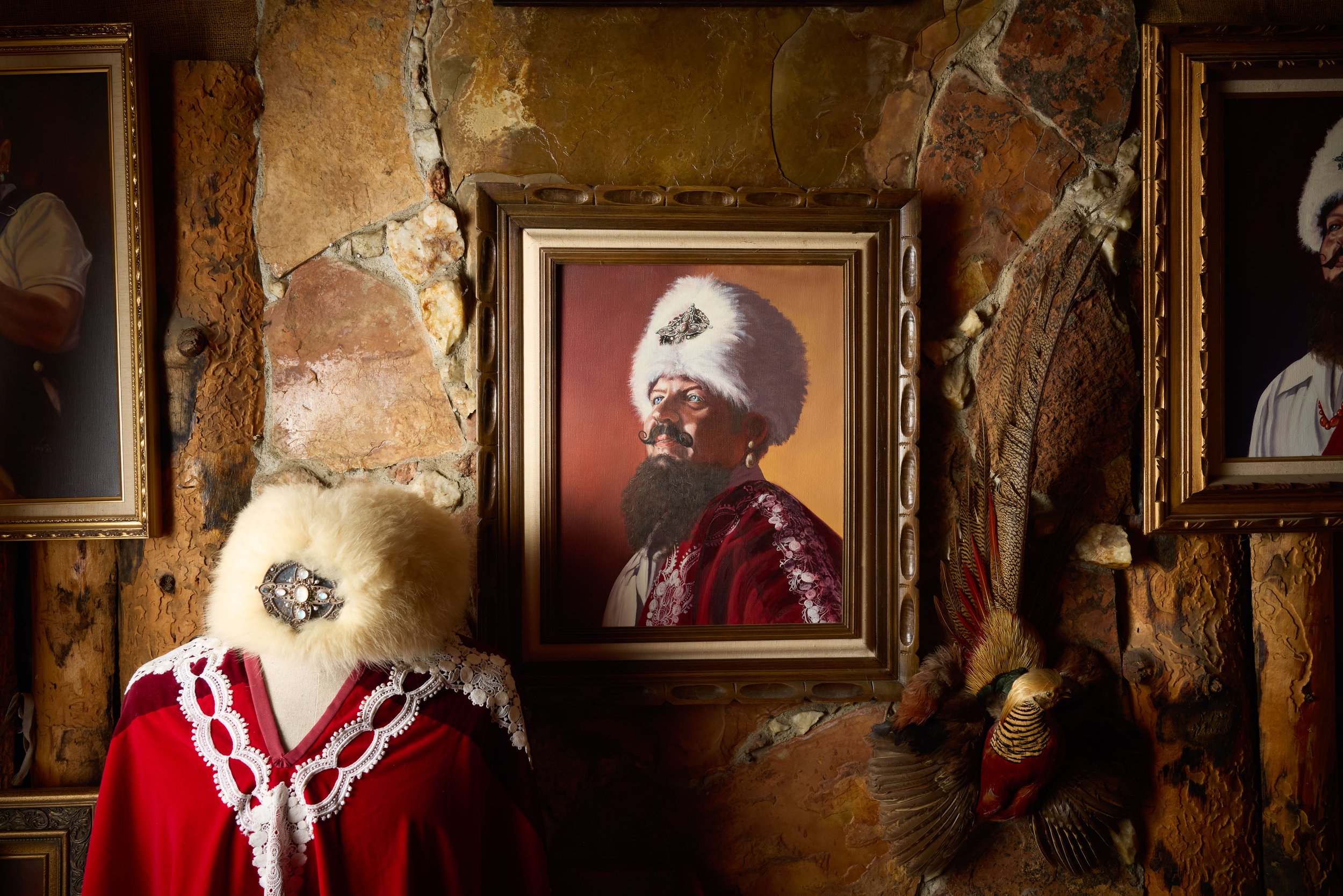
Dell Kinyon Taylor, Self Portrait, Oil on Canvas (1977) Peacock mounted (1961), Jewelry constructed (1973-76), Clothing sewn (1973)
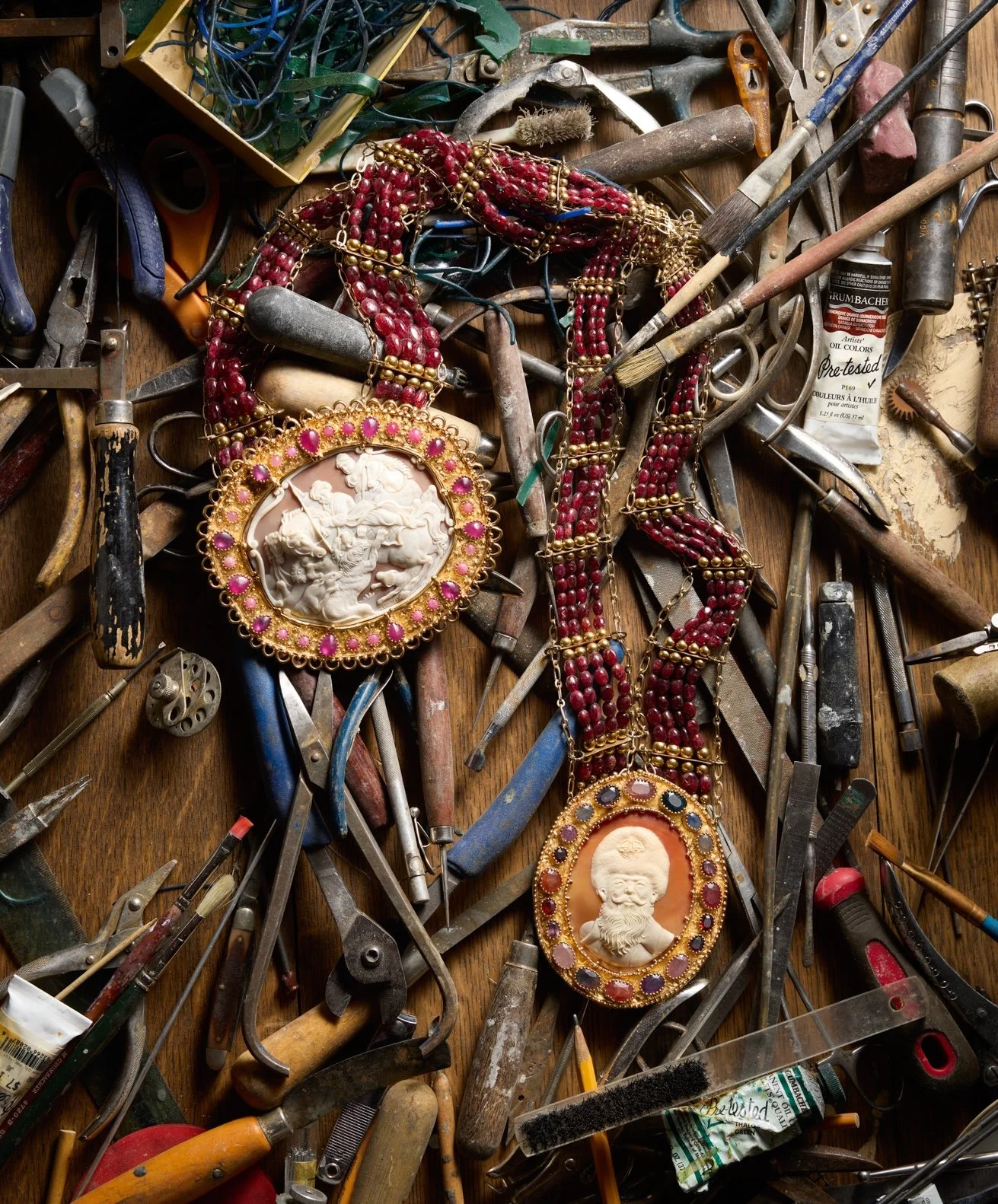
The Show
In May of 1988, following his retirement, he attempted a one-man show at the historic Union Station. Preparation for the exhibit started nearly a decade before it ever opened.
Almost immediately, it was met with resistance from the city council. One council member was quoted publicly calling it “garbage.” They demanded for the withdraw of his work from the public space.
To say it was hard on him is an understatement; it destroyed him on so many levels, to the point where he became a near complete shut-in. He stopped signing his works for years, never to return to dating them. He never showed anyone publicly or spoke to anyone about these things again.
Showing people threatened his very ability to make things and continue what he was doing. So you must first respect his friends, who had the confidence to take their clothing off and be photographed. Then, Dell had to find a way to develop it without anyone knowing.
After, he would go into his basement or behind a parted cloth and paint these portraits in secret. When painting the first 3 full nudes, he said he waited for weeks for the cops to show up, but they never did. So, he just kept on painting.
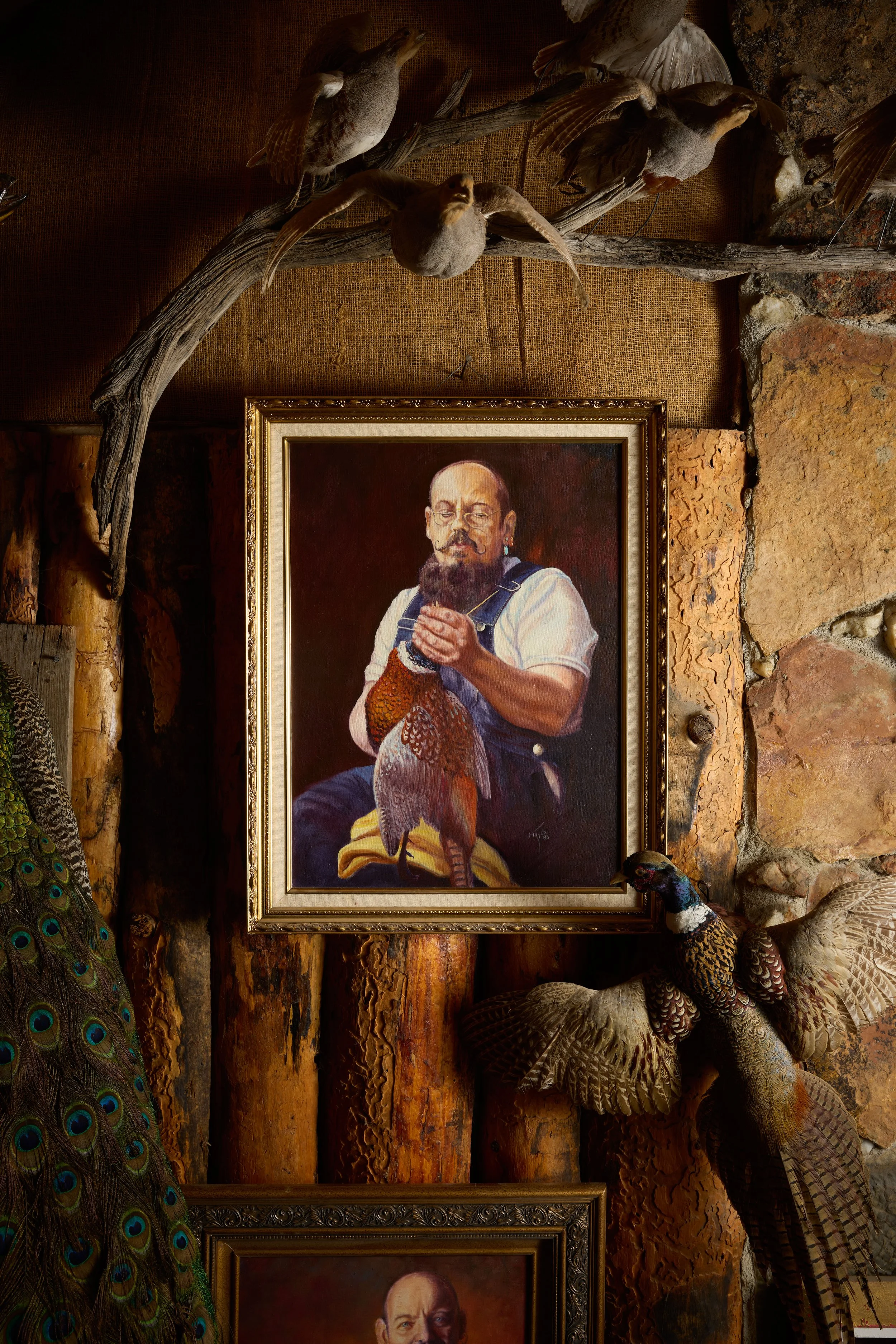
Building A World
One project led to another. His ideas accumulated in places, just as materials would fill rooms. Rooms then would be changed, just as mediums changed over time. The house itself began to take on something new – it gave the work a “body.”
Just as ours, this body is not without scars and stories to tell.
The depth of each piece, or consistency within a collection, is truly what creates the magnificence of the body as a whole. They tell a story individually and combined, a record or diary. He’d reference feelings he had in the past, show us things he was trying to understand, and explain what was happening to him in the moment.
Looking at it, I feel the expression of a rich life full of unknown history. Woven together with the materials, feelings, and expression of what we call the stories of a man’s life. I’ve seen literal “time” buried deep in a dark corner. Hiding within things beneath things, I would find treasures in trash bags or boxes…masterpieces with 40-50 years of dust laying against the wall.