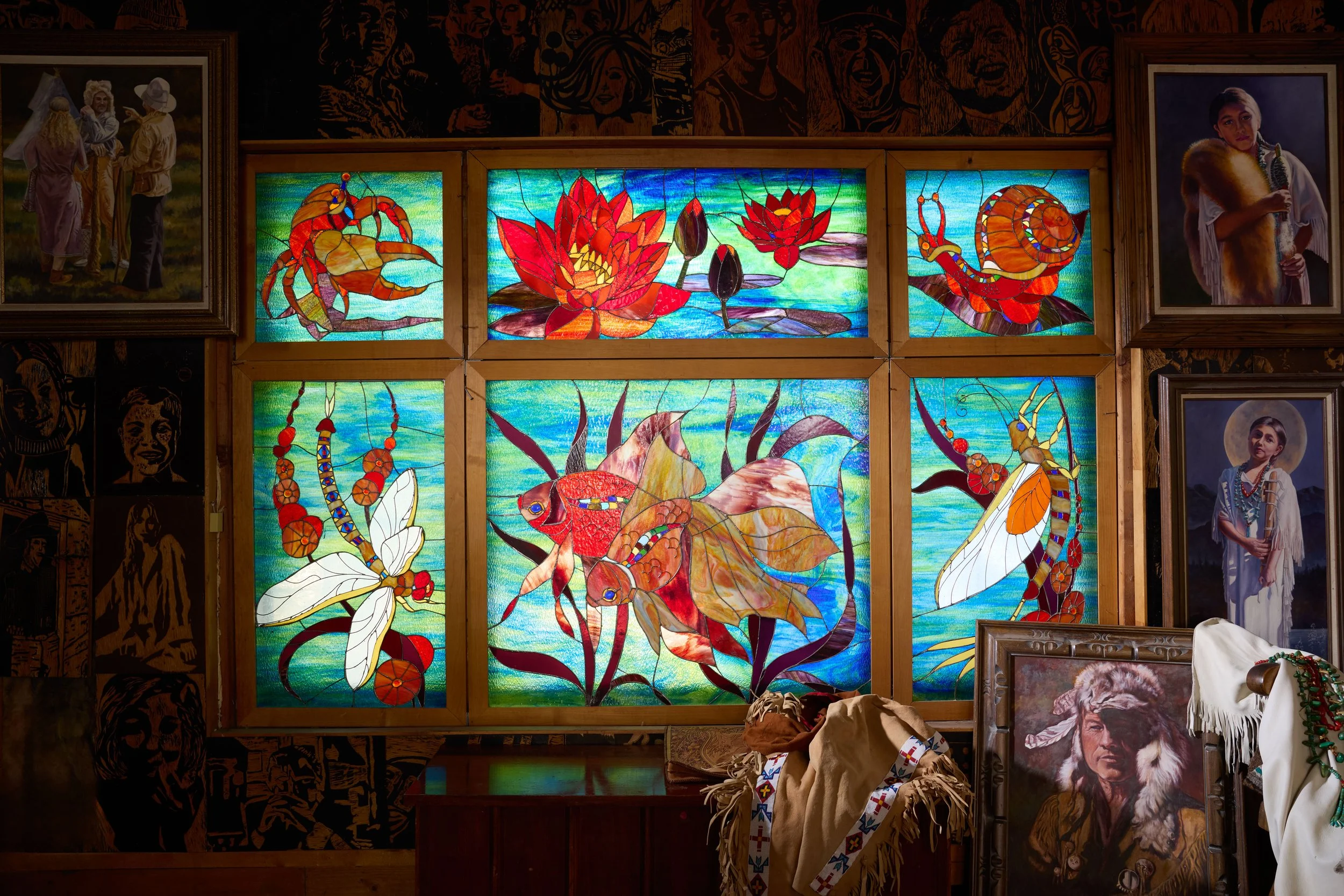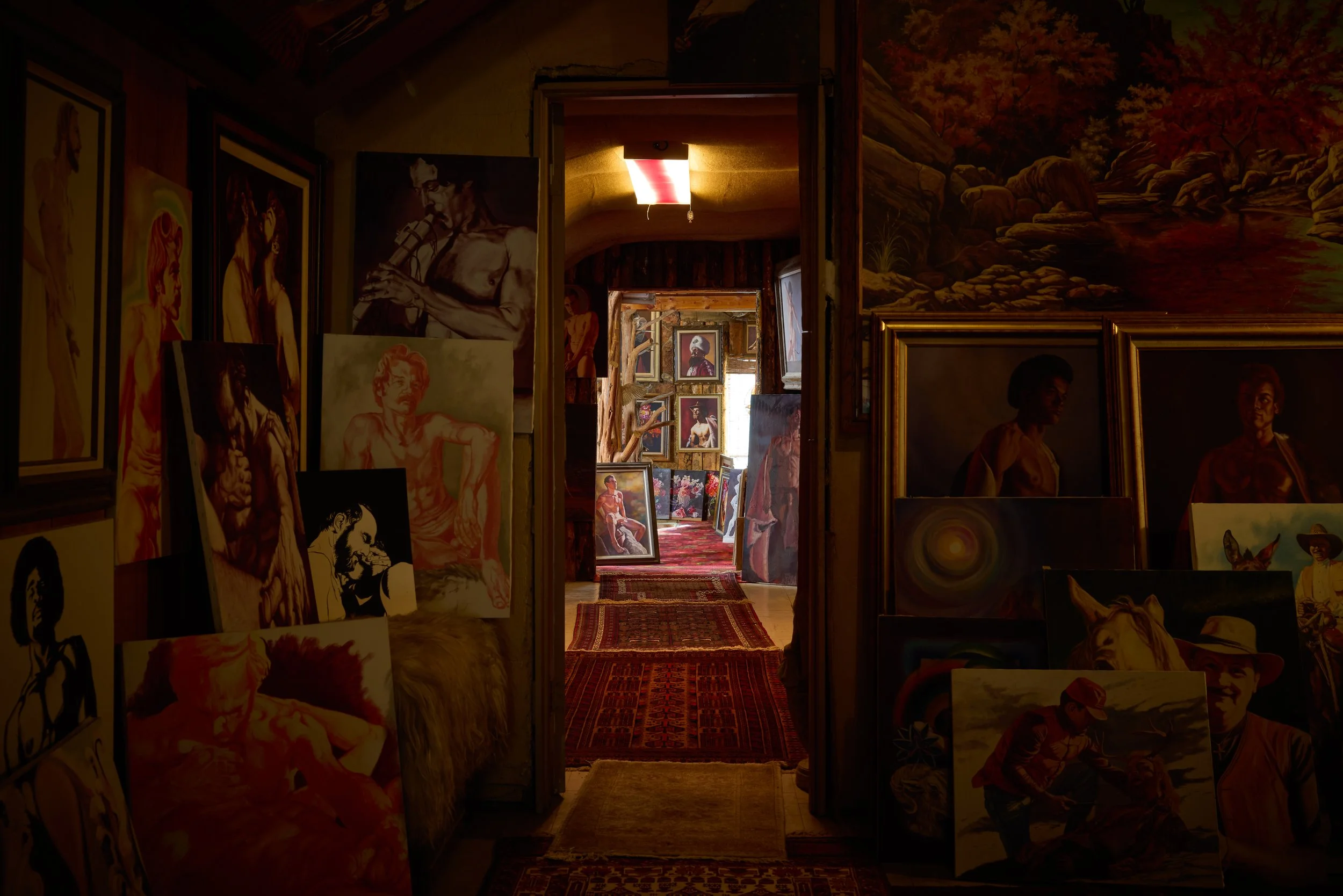
In His World
Nothing existed alone
What Art Collection?
It’s easy to look at what Dell left behind and see a big pile of art or maybe something somebody might collect.
Is that really what this is? Or is it something much more?
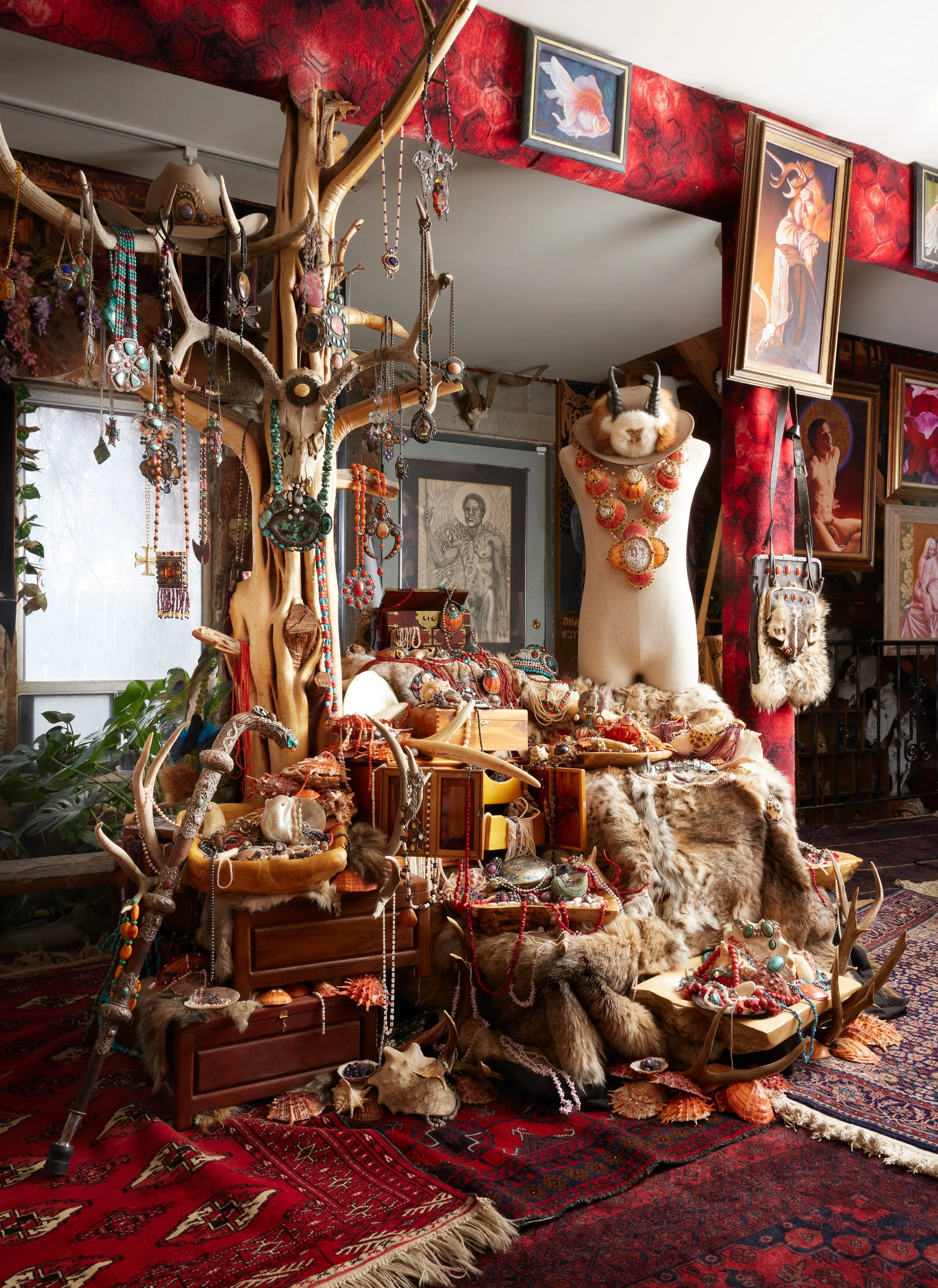
He trapped, skinned, and tanned the furs seen within the paintings. The flowers were grown in his garden. The jewelry displayed, clothing worn, and most of the objects shown were first made by his hands.
He’d stretch his own canvas for paintings. He’d collect, cut, and polish stones for jewelry. He’d cast gold in the chicken shed and save materials out of trash cans.
Nothing existed alone, and everything informed the next piece. Using his own work as references, he’d say, “How could I understand the mistakes I made last time if I couldn’t see what they were?”
Turning Shit into Gold.
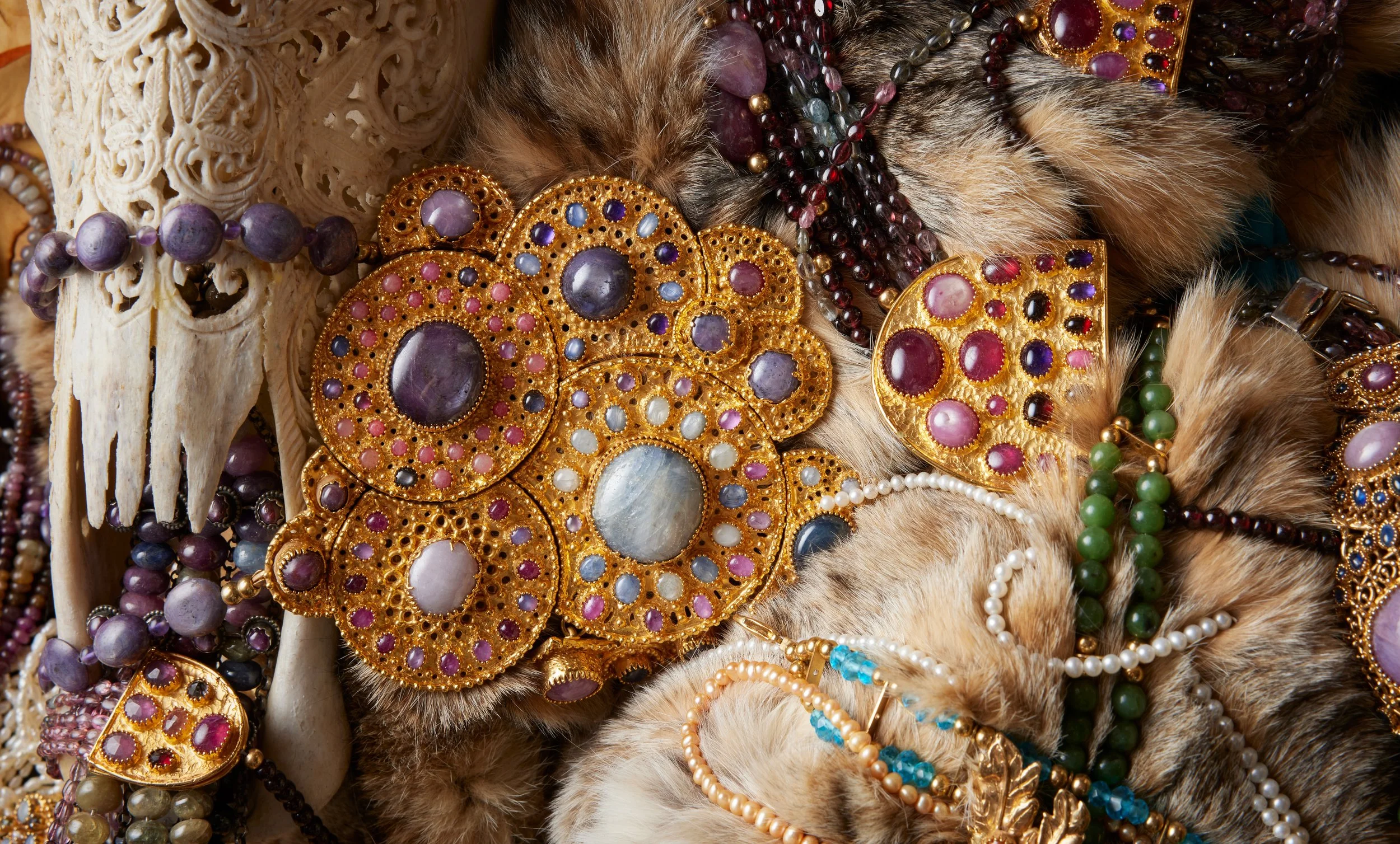
Dell couldn’t afford half the materials he used in his life. That’s part of the magic of its making. He’d scrimp and save to the point of feeding his family discarded bird remnants from that week’s mounting.
He’d find discarded paint in school classes and use both sides of a canvas. Finding the trash bins outside of glass cutter businesses, he’d collect what little remnants there might be.
He’d hoard every penny and nickel in preparation for the Tucson Gem Show. His annual pilgrimage there consumed his entire savings so that he might have materials for the following year.
He learned at a very young age how to appreciate just that: what he had, how he got it, and what it could be next. He never let anything go. He said the materials would speak to him and tell him what they wanted to become. Some said they had to wait years until they could be used.
That’s why you see the Egyptian scarab or dung beetle throughout the works. He felt a connection with the beetle because he too had to find a way to take “shit” and turn it into gold.
Images within Images
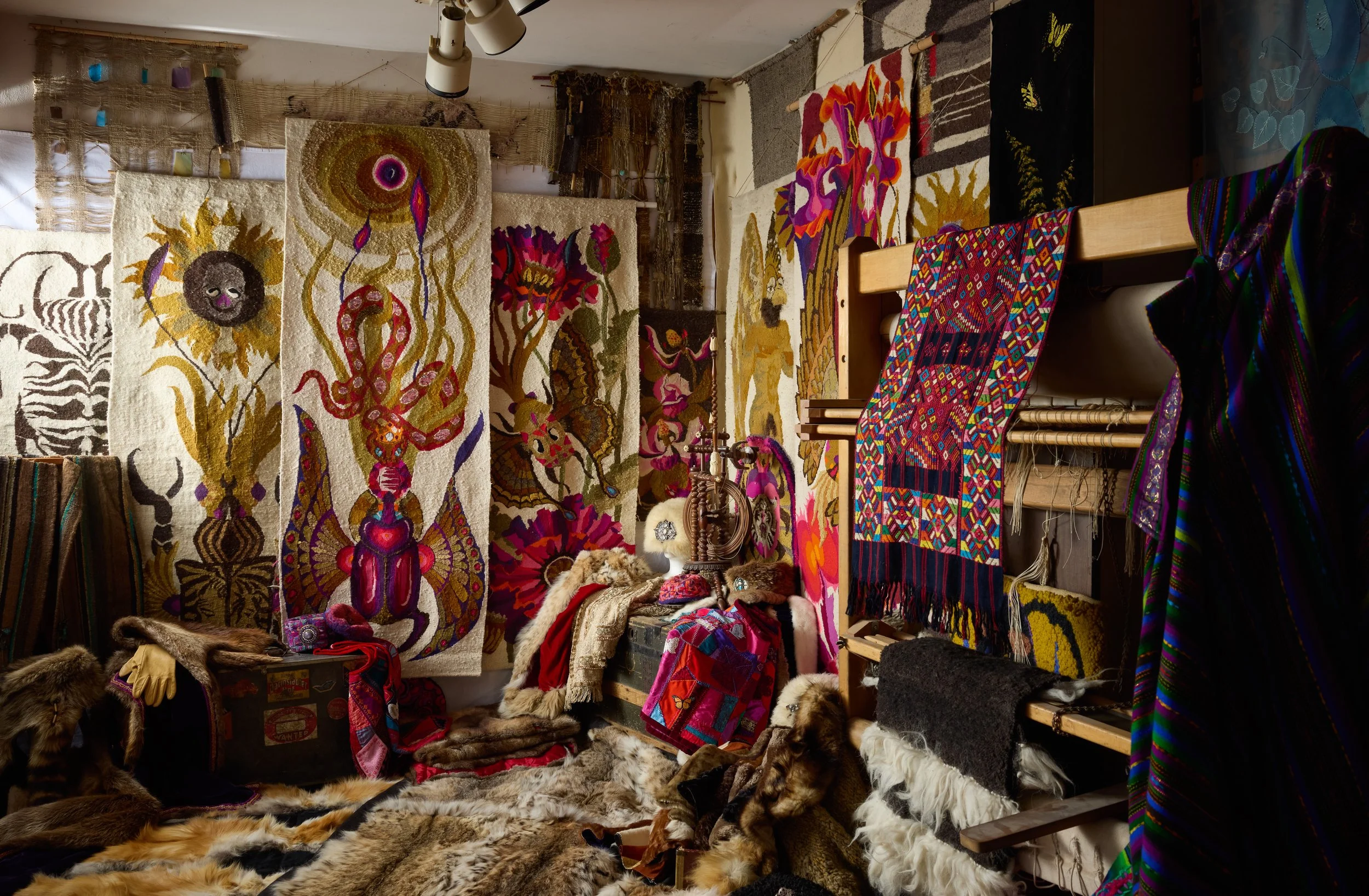
When you’ve become intimate with his work long enough, you start to recognize the repeating symbols and use of hidden gestures within his pieces. Today, it could almost be called his character, aura, or style.
He would intentionally hide and sometimes, I feel unconsciously, place phallic imagery within nearly all his works. People closest to the collection fully understand it’s a game: find the hidden phallic symbols no one can see.
Sometimes it’s so subtle and incredibly intricate; paintings I’ve looked at from a young age only showed themselves recently.
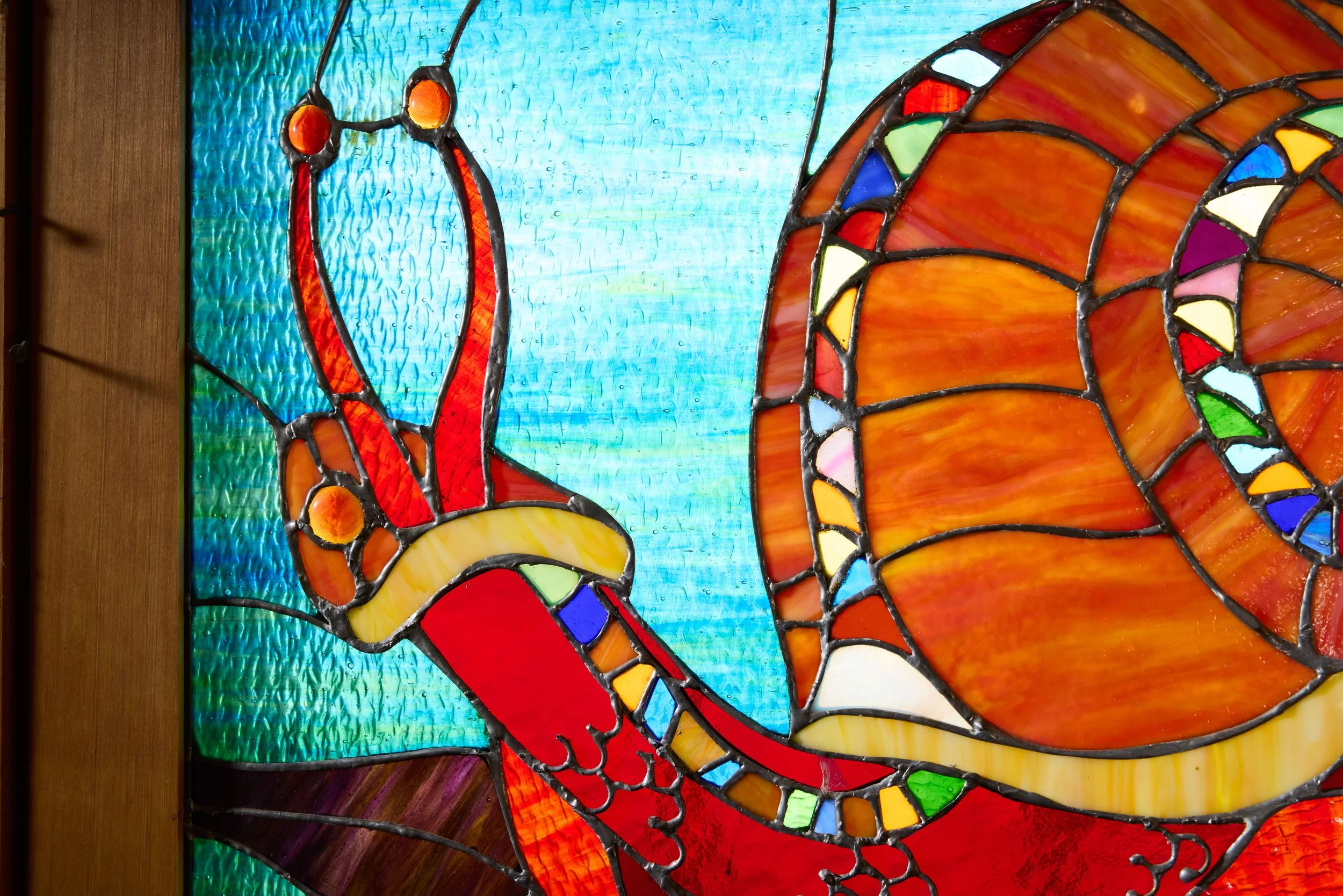
It could be the head of a snail inside a stain glass.
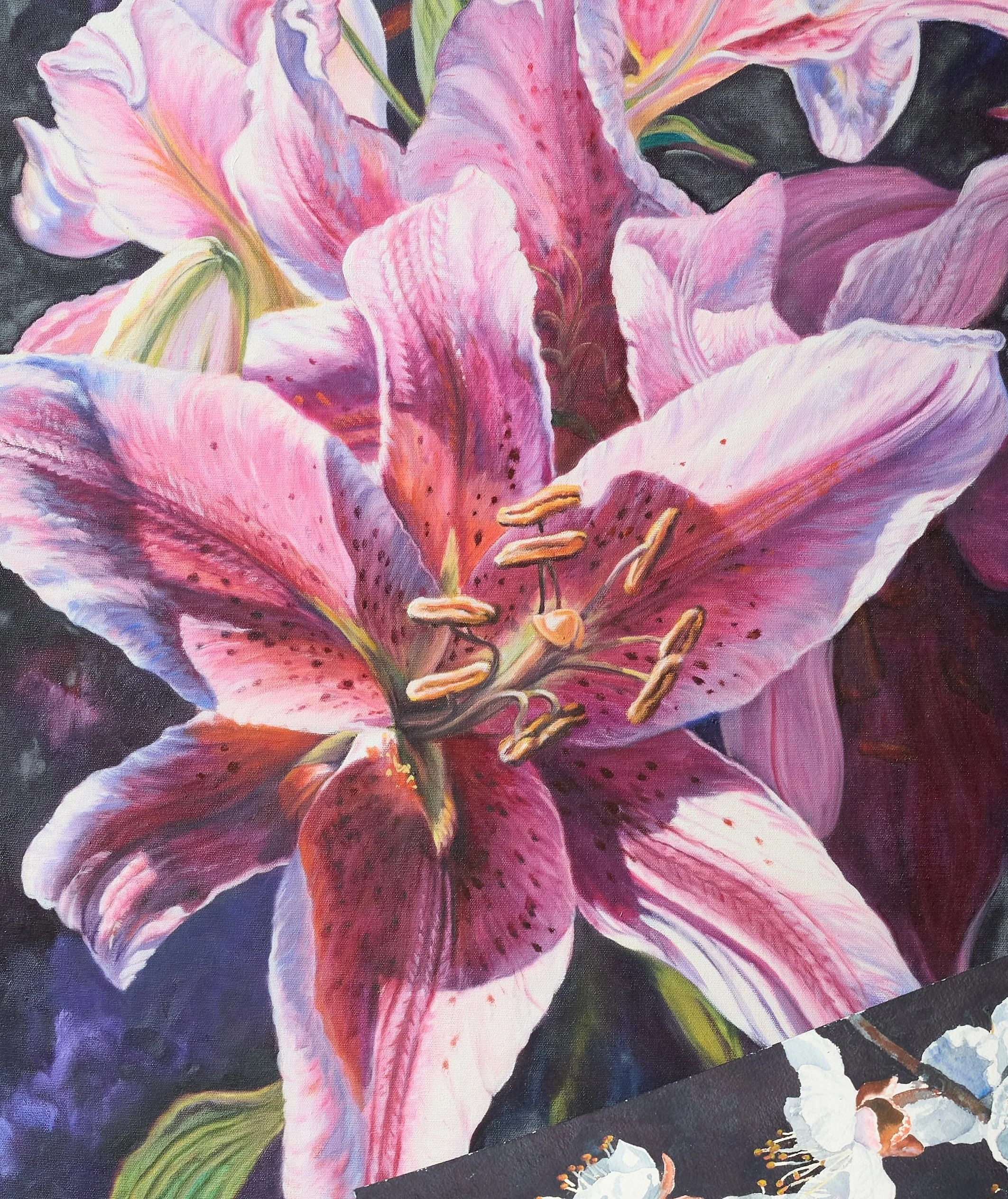
Seen within the peddles of a flower.
The spurs of a ring.
It could even be hidden inside the portrait of a nude figure. Sometimes in the hair or within the fingers. I’ve been able to locate them in people’s knees, knuckles, and wrists; it’s truly remarkable, to the point that I question if he fully knew what he was doing when he was doing it. Sometime the Unconscious takes over, and someone else is doing the work.
Two Sides of a Coin

Dell constantly referred to himself as being two people and said we were all two brains: that we’re both here and over there, halfway in and out of both.
He’d refer to himself as “Dell” being the teacher, husband, worker – the one who took out the trash and made dinner. But “Kinyon,” he was the artist who could say what he wanted and have sex however he liked. Kinyon was a dragon who could breathe fire endlessly.
He always called himself fat and ugly, saying things such as, “It was disaster to my poor father, the bishop of the church, to have a fat, queer, no-good-for-nothing son who couldn’t work the farm.”
Reading his journal entries can be rather chilling. He was beyond grotesque to himself at times.
“I HATE YOU! GOD DAMN YOU! FUCK YOU FOR BEING GAY!! WHY WONT YOU JUST KILL YOURSELF!!”
It’s rather intense to many degrees; I’ve noticed almost two completely different handwriting styles within the journals and personal records. Among Dell's home, one phrase appears again and again. Written thousands of times over decades. No explanation was ever attached. Only the words themselves.
“Do not need.
Do not want.
Do not wish.
Do not expect.
Do not ask.
Do not intrude.
Do not talk too much.
WORK.
GIVE, GIVE, GIVE”
What Remains
In private he told me he planned on burning the house down with him and everything in it. The gas can he bought at Ace Hardware years ago is still out back in the shed.
“I can always do it tomorrow,” he said.
In the mid-1970s, he traveled to the Golden Gate Bridge to throw himself off. Along the way there, he had an unplanned visit at someone’s house just inside the city.
That evening, he found one of his dearest, closest, and most important friends: marijuana (or as he would always say, “pot”). That night, he said he came to the conclusion: “I can always just do it tomorrow.”
The next day he woke up smoked some more pot and said the same thing for nearly 50 years.
Should we just listen to its maker and burn it all? What are we to do to understand and protect it? Where do we start? How do we end? Is any of this even worth protecting? Moreover, what has to happen to make something history?